

Bluefin Innovations partnered with Nantrak to develop a highly rugged, micro-sized embedded tracking device capable of transmitting signals from projectiles over long distances for tracking and status monitoring. The device was designed for hunting sports and defense markets. The project represented a novel and demanding R&D challenge, requiring extreme miniaturization, survivability under high-impact deployment, and reliable long-range communication.
The tracker was designed to be forcibly embedded into an object upon impact, with performance goals that included transmission ranges exceeding one mile, watertight integrity, and survivability under significant shock loads. The device needed to activate automatically upon impact, operate on a custom micro lithium-polymer battery, and maintain signal integrity despite being embedded in tissue.
This engagement highlighted Bluefin Innovations’ ability to tackle unconventional engineering problems, starting from early-stage research and minimal initial concepts to deliver a fully functional, field-tested tracking platform applicable across consumer, research, and defense markets.
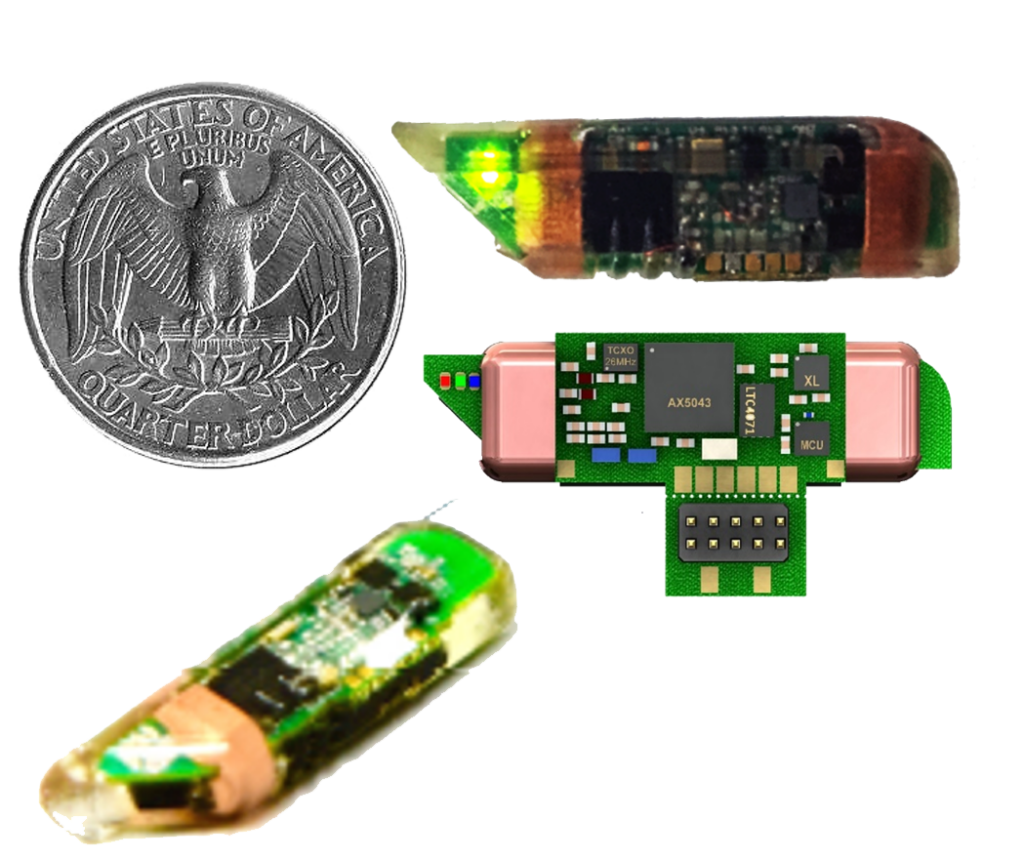
The tracking device is around the size of a quarter and houses the electronics, power, and wireless modules.
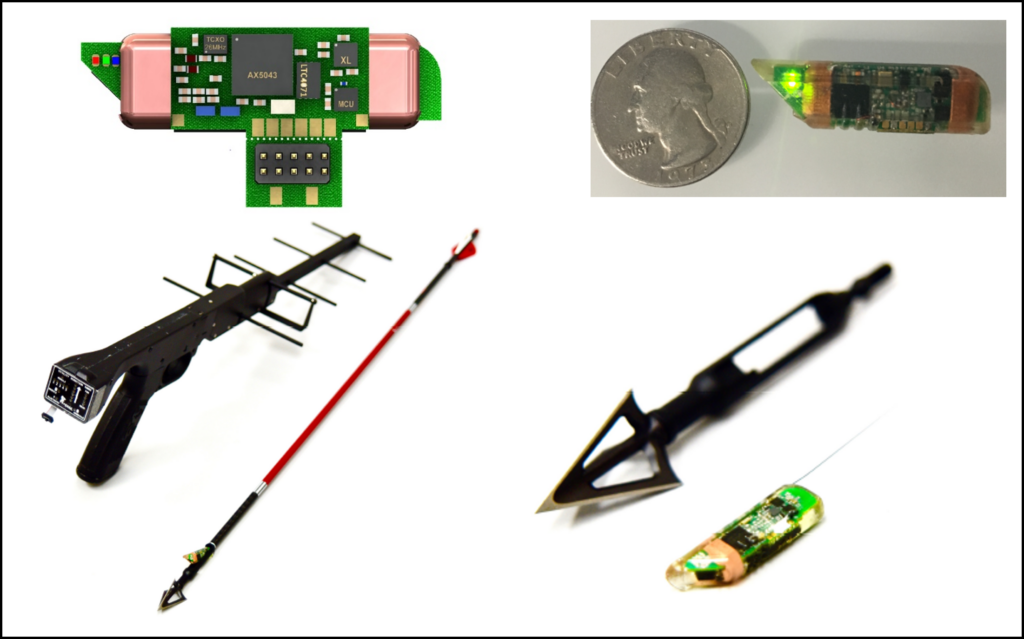
The tracking device and the handheld tracker
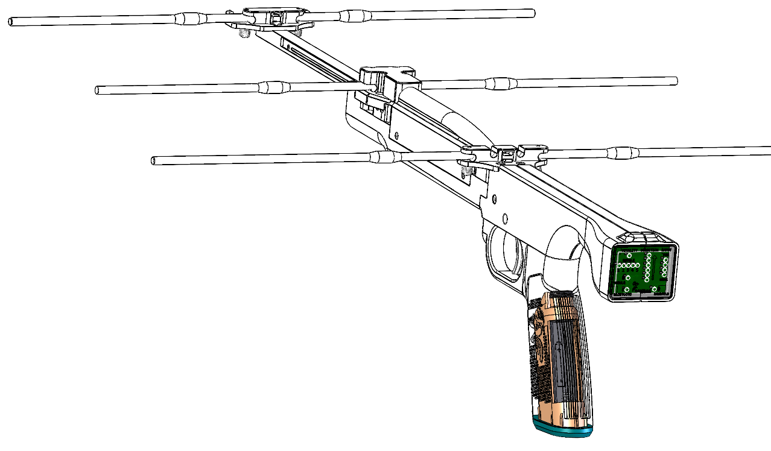
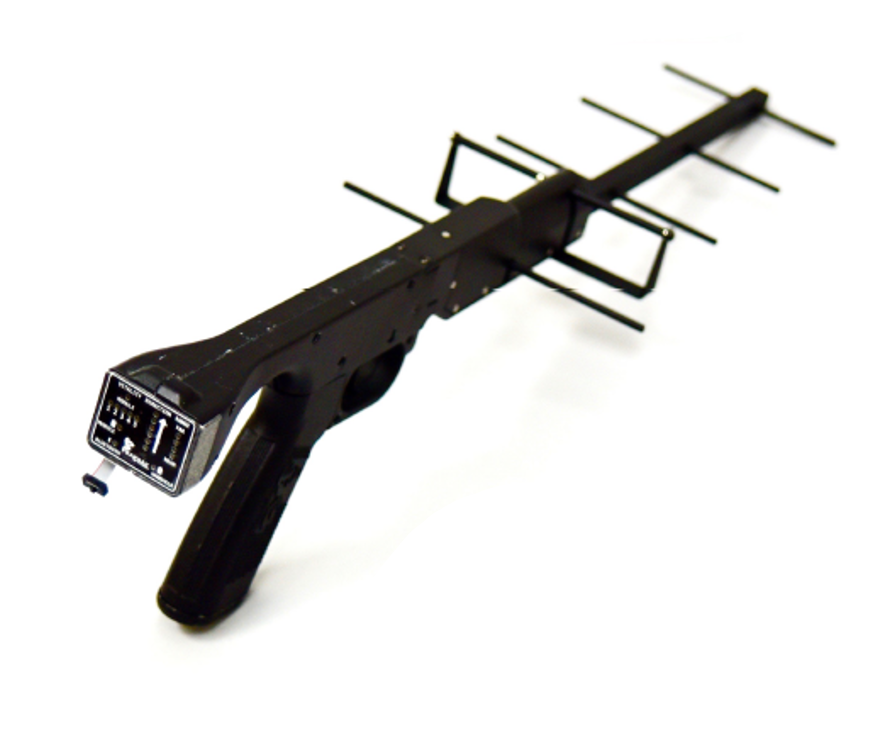
The tracker was designed to track the location of the implanted device from a distance of 2 miles.
The primary objectives of the Nantrac Micro Tracker program included:
The Nantrak project presented a set of unique technical and operational challenges:
Bluefin employed an iterative, research-driven development approach supported by close collaboration with the Nantrac team and detailed engineering documentation. Early phases focused heavily on feasibility research, including antenna frequency selection, data bandwidth optimization, and regulatory considerations.
Key process elements included:
Deployment reliability testing represented a unique operational challenge. The team developed repeatable test setups to simulate impact events, ensuring the tracker detached from its carrier—such as an arrow—upon impact and embedded correctly without damage.
Quality assurance processes included defined bench-test recipes and close vendor collaboration to maintain consistency and accountability during prototype builds.
NanTrak, in collaboration with Bluefin Innovations, introduced this powerful tracking technology that has gained attention of the hunting community as well as a growing interest in the defense market.
Testimonial from Evan Parker