Nocturnal enuresis—commonly known as bedwetting—stems from a developmental delay in the neural pathway that links the bladder to the brain, preventing a child’s brain from recognizing the signal that the bladder is full.
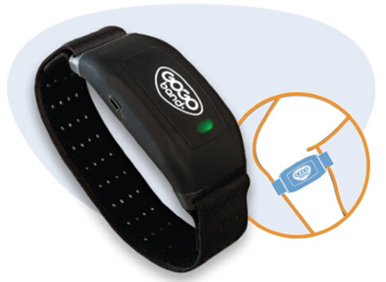
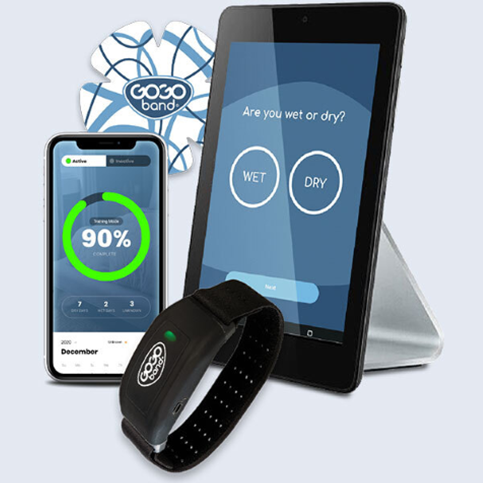
Gogo Band partnered with Bluefin Innovations to addresses this issue with an innovative, AI‑powered system: a wearable band paired with a sensor, tablet, and smartphone app.
Over 10 nights of “Training Mode,” it learns your child’s unique biometric signature of a full bladder. Then, in “Predictive Mode,” it sends wake‑up alerts before an accident occurs, helping the child build the critical bladder‑to‑brain connection. As they gain confidence, the system transitions to “Lifestyle Mode,” gradually reducing alerts until the child consistently wakes up on their own—ultimately achieving dry nights and graduating from the program.
The Gogo Band project presented several technical and operational challenges:
Bluefin employed an agile, iterative development approach supported by close client collaboration and rigorous engineering documentation. Extensive use of CAD modeling and 3D printing enabled rapid concept iteration and early validation of ergonomics and functionality.
Key process elements included:
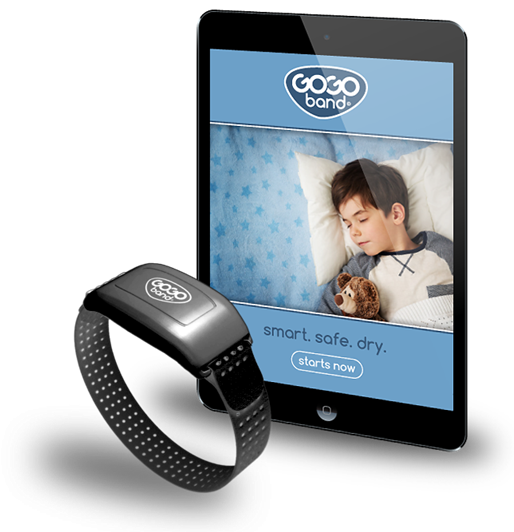
The Gogo Band program resulted in a fully functional, manufacturable wearable device supported by cloud-connected intelligence. The product successfully transitioned from early concepts to real-world deployment, demonstrating Bluefin Innovations’ ability to execute across the full product lifecycle.
The device has been delivered in several hundred units over an extended production period and continues to receive ongoing engineering support. The Gogo Band solution has also been introduced into clinical workflows and is being prescribed through physicians, validating both the technical robustness and real-world value of the system.